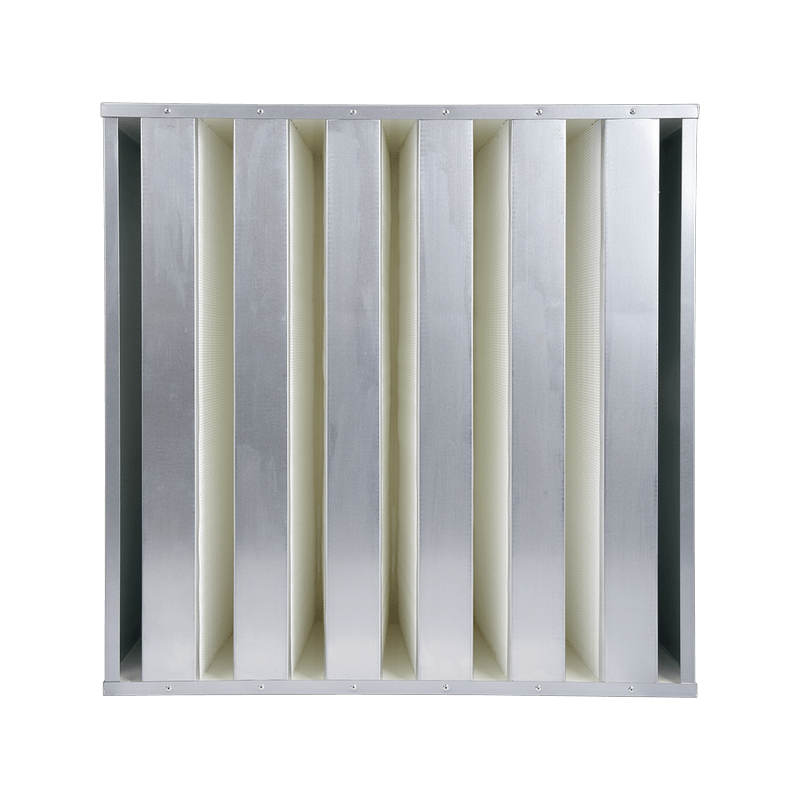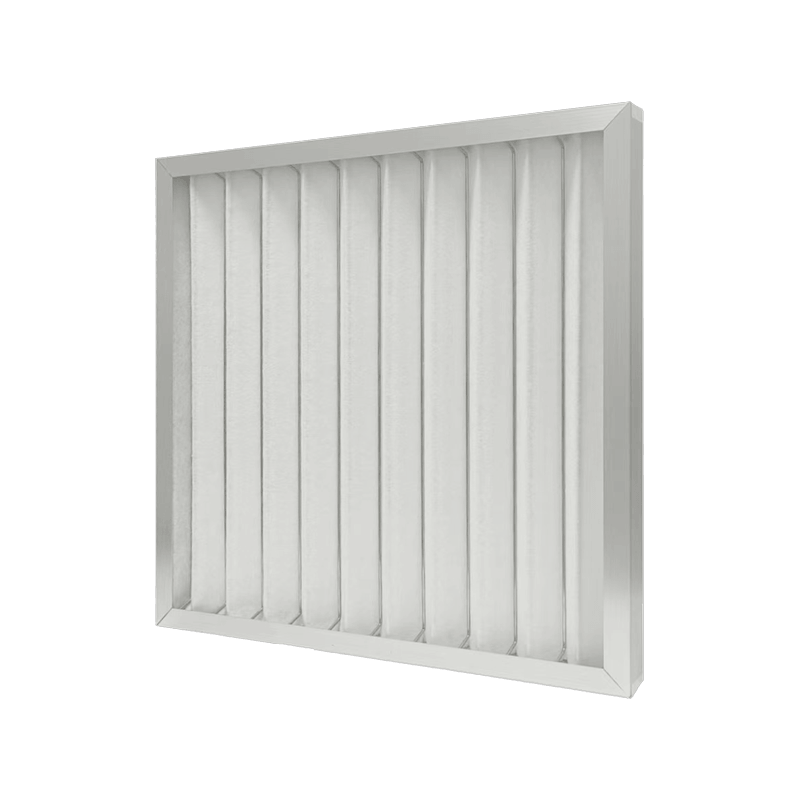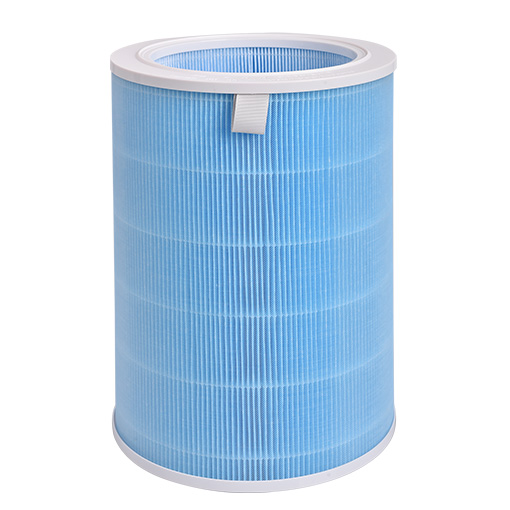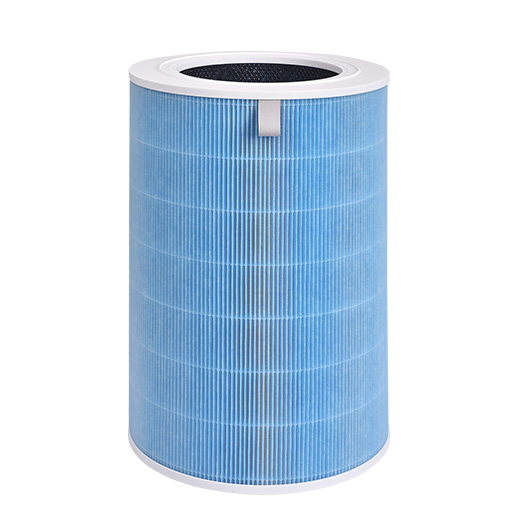
Summary: How do you choose a humidifier filter manufacturer? First look at how it moves water into the air, and you will understand what the filter is actually doing. Evaporative humidifiers vaporize only water molecules and leave the solutes on the wet membrane, at the cost of scale buildup and declining output. Ultrasonic humidifiers break water into mist — fast, but they carry minerals and microorganisms into the air. So when choosing a humidifier filter manufacturer, compare filter-media formulation, process, and degradation curve. LANSIR’s wet membranes and filters are all produced on our own lines.
Keywords: humidifier filter manufacturer, humidifier working principle, humidifier filter, how to choose a humidifier filter
1. First, Be Clear: The White Mist Is Not Water Vapor
In winter, when you run a humidifier in a heated room, the cloud of white mist above the nozzle is easily mistaken for water vapor. It isn’t. True water vapor exists as individual water molecules — colorless, transparent, and invisible to the eye. The white mist, by contrast, consists of tiny droplets formed as the moisture cools and condenses. The few centimeters just beyond a kettle’s spout stay transparent and only turn white farther up; that is the same phenomenon. So are your breath on a cold day and the film of water on a bathroom mirror.
This distinction is not mere nitpicking. It sets the tone for everything that follows: is a humidifier “making vapor” or “making mist”? These are two entirely different physical processes, and they cost different things.
Regardless of whether it makes vapor or mist, a humidifier’s working principle is simply to move water into the air. To do that, water molecules must first leave the liquid surface. There are only two ways: let them escape one by one, or break the water apart so countless smaller droplets fly out in its place. The first is a phase change; the second is mechanical dispersion. Household humidifiers may go by many names — ultrasonic, evaporative, electric-heat, hybrid — and the national standard classifies them into exactly these four types by humidification method, but they all boil down to these two paths.
2. Slow, but Takes Only Water: The Phase-Change Path
Start with the first. For a water molecule to leave the liquid surface it must pay an energy cost called the latent heat of vaporization — at around twenty degrees, roughly 2,450 kilojoules per kilogram of water. This energy does not come from outside; it is drawn from the surrounding air, so evaporation cools the spot where it happens. That is why sprinkling water on the ground cools a yard in summer.
But energy alone is not enough — there must also be “room”. When the air already holds many water molecules, it is hard to squeeze more in. This explains the most confusing thing about humidifiers: why a humidity reading and how a room actually feels can differ so much. Humidity is a ratio, not an absolute value. As temperature rises, air can hold more water, the denominator grows, and relative humidity drops. Heat a room at 14°C and 60% to 25°C without adding a drop of water, and the reading falls to around 30%. Winter dryness is half the outdoor air being dry to begin with, and half the heating “stretching” the air.
An evaporative humidifier simply creates the right conditions for water molecules. It does not slice the water; it spreads it out. Evaporation pads, wet membranes, filters, rotating drums — the names differ, but their job is the same: to wick water up and spread it into a thin film, then push indoor air across that wet surface with a fan. The larger the area, the more molecules can “take off” at once.
How much does spreading matter? If a liter of water were made into ideal spheres 5 micrometers in diameter, their combined surface area would exceed a thousand square meters — while the still water surface in a tank measures only a few hundredths of a square meter. That is a difference of four or five orders of magnitude.
More importantly, almost nothing but water molecules leaves on this path. Calcium and magnesium ions, minerals, suspended impurities, and microorganisms do not evaporate; they stay in the wet membrane or fall back into the tank. This is why evaporative humidifiers build up scale over time and why their filters stiffen — the material never leaves, it just accumulates.
Slowness and coolness are its character, not its flaws. What really gives people pause is how convenient the other path looks: press a switch and mist appears, with no waiting and no filter replacement.
3. Fast, but Takes More Than Water: The Mechanical-Dispersion Path
This is the path of the ultrasonic humidifier. It does not change the state of the water; it merely turns one large body of water into countless small pieces. The core is the round metal disc at the bottom of the tank, called a piezoelectric ceramic transducer. When powered, it vibrates millions of times per second (commonly 1.7 to 2.4 megahertz), stirring up rings of extremely fine ripples on the surface. Vibrate a little harder and the wave crests break away from the surface into micron-scale droplets. Lang described this mechanism clearly back in 1962, and it remains the physical basis of these machines today.
So there is an easily overlooked fact: inside the machine, the water never turns gaseous. It goes in liquid and comes out liquid, only fine enough to float. The so-called “cool mist” is cool water — and mist of water.
This is the source of all its advantages — fast mist, no heating, no filter replacement, quiet operation — and, looked at from the other side, the source of all its troubles.
4. What Really Matters Is What the Mist Carries
The troubles here come in three layers, each more hidden than the last.
The most visible is white dust. When the water evaporates, the dissolved calcium and magnesium salts do not vaporize with it; they settle as solid particles — that white residue on your desk that reappears the day after you wipe it. The portion that stays airborne falls squarely in the inhalable range. And the harder the water, the larger the amount tends to be. So when the manual says “use purified water,” it is not the machine being fussy.
The second layer is invisible. A water tank — with water, oxygen, room temperature, and darkness — is a suitable environment for bacterial growth. One study tracked indoor bacterial aerosols after continuous operation of a portable ultrasonic humidifier: concentrations rose exponentially, mostly in the respirable range around 1 micrometer. At 70% relative humidity, counts exceeded a thousand colony-forming units per cubic meter within a week, and the bacterial community shifted markedly toward Pseudomonas, which made up 40%. Another study placed Mycobacterium avium and Mycobacterium abscessus in the tank; both could be aerosolized and recovered in particles of 1 to 5 micrometers — in the authors’ words, “small enough to reach the deepest part of the human lung.”
These are results under controlled conditions. They show that “this path works,” not that normal use must cause problems. But note that ultrasonic atomization itself does no screening. Whatever is in the tank is carried out whole. There is no interception stage on the machine side, so all the work must be done at the source — changing the water, cleaning, and descaling.
The third layer is the clinical endpoint. A 2023 BMJ Case Reports described a previously healthy 50-year-old man who, after repeated exposure to his home ultrasonic humidifier, developed progressive dyspnea and fever on several occasions and recovered fully after discontinuing the humidifier and receiving glucocorticoid therapy. A 2020 paper in Respiratory Medicine enrolled 18 patients with “humidifier lung,” with a mean age of 67.3 years, whose imaging and clinical features were consistent with hypersensitivity pneumonitis.
Such cases are not many, and there is no need for alarm. But they show that repeatedly inhaling aerosols containing microorganisms or proteins has clinically documented consequences. And the conditions for it — bacteria in the tank, continuous misting, and prolonged close-range exposure — are exactly the three most likely to come together in a bedroom. Of course, emission is not the same as inhaled dose; ventilation rate, run time, and distance from the machine all redistribute the concentration.
5. Switching to Evaporative — Does That Make It Clean?
At this point it is easy to reach the conclusion: then buy the mist-free type. That conclusion is broadly valid, but there is a boundary that has only recently been measured.
A study in the Journal of Hazardous Materials specifically measured particle emissions from evaporative humidifiers. It found that they are also a particle source, with emissions coming mainly from the tank. The mechanism is not complicated: water dripping from the wet membrane back onto the surface produces an upward splash of fine water jets, which break into even smaller secondary droplets. The greater the drop height and the stronger the impact, the more secondary droplets form and the more pronounced the emission. The study used the Froude number to gauge this impact; above a certain value the emission rate rises markedly — a critical phenomenon on that specific apparatus, not a universal parameter for every machine. If Pseudomonas aeruginosa was present in the water, both particle emissions and airborne bacterial counts increased sharply; more than 80% of airborne bacteria fell between 0.65 and 3.3 micrometers.
But this finding does not change the conclusion. Under equal conditions, evaporative emissions remain orders of magnitude below ultrasonic — the difference is in magnitude, not in presence.
Following the mechanism one step further: the shallower the water, the greater the drop from the bottom of the wet membrane to the surface. The original paper measured the relationship between drop height and emission rate, without comparing different water levels. So the idea that “you stir more into the air as the tank runs low” is only an inference drawn from that relationship, not experimentally verified. Also, a wet membrane left unwashed grows biofilm; as air passes it is slowly carried out — first the smell, then the bacteria.
6. Two Paths, One Family in Thermodynamics
Since the difference lies in the path, it is worth putting both on the same coordinate system. Evaporation absorbs the air’s own heat, so air temperature drops slightly and moisture content rises while its enthalpy stays roughly constant — in engineering terms, isenthalpic humidification, also called adiabatic humidification. Ultrasonic, high-pressure spray, and wet-membrane evaporation all fall into this category. Note that “isenthalpic” is an approximation: fan work adds a little heat, the body sheds heat, and the mist droplets may not all evaporate — all of which are set aside. Truly at the other end are electric-heat and electrode types: electrical energy turns directly into heat and boils the water into steam without a temperature drop, an approximation of isothermal humidification.
This classification is not academic fussiness; it explains a common misunderstanding. Many people think ultrasonic “doesn’t heat, so it doesn’t cool” — but that holds only at the outlet. Once the mist enters the room it still evaporates and still absorbs heat; the cooling is just spread across the whole room and goes unnoticed.
7. Choosing the Right Humidifier Filter Manufacturer: Conclusions
Once the path is understood, many purchase and usage questions no longer require memorizing specifications.
First, watch where the water goes. On the mechanical-dispersion path, whatever is in the water ends up in the air; the incoming water quality is directly a variable in air quality. On the phase-change path, almost only water molecules leave, and the solutes stay in the machine. So the answer to “can I use tap water” is inherently different for the two types — not because one is more fastidious, but because the paths differ. Recent systematic reviews in this field have brought together decades of research and reached the same conclusion: the concentrations of microorganisms, soluble metals, and minerals in the incoming water are directly reflected in the air a humidifier emits.
Second, watch how output changes with humidity. Evaporative humidifiers are self-limiting — the more humid the air, the slower the evaporation. This is both a drawback (they struggle in the plum-rain season) and a safety valve (they are unlikely to over-humidify). Ultrasonic humidifiers have no such limit; how much they add depends entirely on the person watching the hygrometer.
Third, watch what needs maintenance. An ultrasonic humidifier needs its water managed: change the water daily and clean the tank and atomizer. Once scale builds on the vibrating plate, the mist output visibly drops. An evaporative humidifier needs its wet surface managed — and that is exactly the part most easily forgotten.
Speaking of maintenance, one specific decay process deserves mention. Evaporative output depends on effective evaporation area, that is, how much water film can be spread. In a new filter, the fibers are connected by open micropores; capillary action wicks water up into a continuous film, and passing air carries away surface molecules. After a month or two, calcium and magnesium crystallize on the fiber surfaces and gradually plug the pores; the humid environment also lets biofilm grow. The result is not simply a “dirty filter” but water that can no longer spread — so output naturally falls.
Material differences stand out here too, but conclusions should not rest on material alone. Cellulosic materials are hydrophilic and wick quickly, but once scaled they often cannot be cleaned back to new, making them consumables. Plastic mesh and resin structures resist water, can be brushed and reused, and have larger pores. Actual performance also depends on fiber diameter, porosity, and structure thickness. The most reliable way to judge replacement is to compare output before and after cleaning at the same setting — not how long the filter has been used.
Beyond maintenance, there is a frequently asked phenomenon: running all night, the hygrometer barely moves. A room is not a sealed jar. Ventilation, moisture absorbed by walls and furniture, and cold outdoor air seeping in and being heated all draw water away at the same time. Suppose a machine delivers 300 milliliters of water per hour into a room with a high ventilation rate — it may be just enough to offset these losses. Whether output is sufficient is never the machine’s problem alone.
Whichever type you choose, a few things are common to all: empty, wipe, and refill the tank with fresh water every day; clean it thoroughly every three days; use low-mineral water, especially for ultrasonic models; and watch a hygrometer to avoid over-humidifying. The U.S. Environmental Protection Agency’s guidance on home humidifier use says the same.
Conclusion
Back to the title. How does a humidifier work? In the end there are only two paths: send water molecules out one by one, or break the water apart and scatter it.
The first is slow, limited by humidity, and requires maintaining a wet surface — but almost only water enters the air. The second is fast and needs no filter replacement, at the cost of the water’s minerals and microorganisms entering the air with the droplets. The claim that “mist-free is healthier” is not marketing spin; it is the physical consequence of each path — the difference lies in path and magnitude, not in presence. Mist-free is not zero risk either; it merely pushes emissions down by an order of magnitude.
So choosing a machine is ultimately choosing where you are willing to put in the effort: replacing filters on a schedule and accepting slower humidification, or changing water daily, watching water quality, and accepting that white film beside the machine. The principle cannot make the choice for you, but it can at least make it clearer.
Understanding the principle actually makes the choice simpler: each path has its own cost, and the filter is always a consumable that degrades and must be replaced. So the question is not which humidifier filter manufacturer quotes the lowest unit price, but which one can explain its filter-media formulation, process, and degradation performance clearly. LANSIR has made air filtration products for over a decade; our humidifier filters (humidifier paper and humidifier fiber materials, in wheel, cylinder, and flat-panel forms) are produced on our own lines, fitting air purifiers, humidifiers, and fresh-air systems. If you need selection help or samples, you are welcome to check our specifications against the principles above.