Opening your windows is the cheapest and most basic way to dilute indoor pollutants. That much is beyond doubt.
But being able to open windows is not the same as having clean air. Outdoor pollutants still seep indoors through air currents.
Sometimes you cannot, dare not, or should not open your windows. A hazy night, pollen season, or nearby wildfire smoke may stop you. So may rush-hour traffic, street noise, dust, or safety and security concerns. In those moments, ventilation simply does not work. That is when an air purifier fills the gap.
1. Ventilation’s blind spot: shut windows won’t keep PM2.5 out
Many people assume that keeping the windows shut keeps you safe. Others think that opening them every day beats any purifier. But particulate matter can infiltrate on its own, even when you never open a door.
Two indicators measure this. The first is the indoor-to-outdoor PM2.5 ratio, or I/O ratio. The second is the “infiltration factor.” This is the share of outdoor particles that enter and stay suspended indoors.
Chen and Zhao (2011) reviewed 21 large-scale studies. They found the PM2.5 infiltration factor varies widely. The mean is about 0.6, with a range of 0.30 to 0.82. So even with doors and windows shut, a large share of outdoor particles still seeps in.
Field data from Atlanta confirms this. Across 60 homes and 810 sampling days, the average infiltration ratio was about 0.70, with a spread of ±0.30.
In more polluted cities, the number is even higher. One study measured 17 homes in Dhaka, Bangladesh. The infiltration factor was 0.83 in the dry season and 0.87 in the wet season. The I/O ratios were 0.97 and 1.05.
In their highlights, the authors note that Dhaka’s infiltration factors are higher than U.S. or European values.
From these figures, roughly 80% or more of indoor PM2.5 in Dhaka comes from outdoors. Note that this is an estimate. The abstract gives only the raw I/O ratio and infiltration factor. The “80% or more” figure is not stated there verbatim.
So the reality is simple. Opening windows in good outdoor air does dilute indoor pollutants. But once haze, pollen, or wildfire smoke appears, opening windows lets pollutants in. The same happens during rush hours.
2. Ventilation standards assume outdoor air is acceptable
You might say: “Then I’ll just ventilate to the standard.” But the problem lies in the standard’s premise.
ANSI/ASHRAE Standard 62-2001 sets the minimum fresh-air rate for living areas. It requires 0.35 air changes per hour and no less than 7.5 L/s per person.
The standard also sets intermittent exhaust rates. Kitchens need 50 L/s and bathrooms 25 L/s. These figures assume that windows can be opened.
But read the exact wording of its footnote a: “In using this table, the outdoor air is assumed to be acceptable.”
In other words, this minimum rate is an “acceptable lower limit.” It assumes that outdoor air meets standards.
Every edition of ASHRAE’s standards keeps this same premise. The current 62.2 also keeps intake openings far from pollution sources. These include exhaust outlets, garages, and combustion equipment. The default is that incoming air must be of acceptable quality.
Here is the crux. In regions with frequent haze, major roads, or long pollen seasons, the premise often fails. Outdoor air simply does not meet standards. The more you ventilate to the standard, the more substandard air you pump into your home.
3. Where air purifiers help: when ventilation falls short
An air purifier is never meant to replace ventilation. It fills in when ventilation drops off:
- At night, when you need windows shut for noise and temperature.
- When outdoor pollutants are high, such as haze, pollen, wildfire smoke, or rush-hour exhaust.
- On streetside locations with heavy noise and dust, where safety and security keep windows shut.
- During extreme weather, or humid “returning south” (hui-nan-tian) weather.
At these times, HEPA interception of particulate matter is the last line of defense. It does not depend on open windows. It is not affected by outdoor air quality. It simply filters the air already in the room, over and over.
4. The health evidence:what studies say about air purifiers
Whether an air purifier is worth buying comes down to one question. Does it actually improve health and comfort? Here are a few solid findings.
Sublett (2011) reviewed HEPA filtration for allergies and respiratory disease. His review covered whole-house, bedroom, and room purifiers. The studies “show benefit to varying degrees.”
Fisk (2013) aggregated 16 newer intervention studies. The health improvements from particle filtration were typically “modest,” in the range of 7% to 25%.
For wildfire smoke, Fisk and Chan (2017) built a model. They estimated that home filtration could avoid 11% to 63% of hospitalizations. It could also avoid 7% to 39% of deaths from wildfire particles. This is a model estimate, not a field count of lives saved.
Ventilation quality is also linked to human performance. Allen et al. (2016, Harvard) ran a controlled office experiment. Under “high ventilation,” cognitive scores were about twice those under conventional ventilation. That is roughly +101% versus conventional, and +61% under enhanced ventilation with low pollutants. But this is an office finding. It cannot be applied directly to every home. It only shows that a link exists between ventilation, pollutants, and cognition.
For indoor air quality in China, GB/T 18883-2022 sets several benchmarks. Carbon dioxide should not exceed roughly 1000 ppm as a 1-hour average. PM2.5 should not exceed 50 µg/m³ as a 24-hour average. Fresh air should be at least 30 m³/h per person.
Note that this is a “recommended” national standard. The “T” stands for recommended. It applies to everyday living. It is not the same as GB 50325, which governs mandatory handover acceptance. It should not be read as a mandatory compliance line.
5. What an air purifier cannot do: gases and radon
Having laid out the benefits, we should also state the limits. Otherwise it would be irresponsible.
HEPA is highly effective against particulate matter, such as PM2.5, pollen, dust-mite fragments, and some microorganisms. But it is nearly useless against gaseous pollutants like carbon dioxide and carbon monoxide. It also fails against radioactive radon gas. Those require ventilation.
This is not our own claim. The U.S. EPA states in “Improving Indoor Air Quality” that air purifiers are “generally not designed to remove gaseous pollutants.”
The EPA also says it does not recommend using purifiers to reduce radon and its decay products. A purifier can at most remove part of radon’s decay products. It does nothing to reduce the radon itself entering the home.
The same goes for carbon monoxide (CO). The EPA’s guidance centers CO reduction on three steps: appliance maintenance, source control, and ventilation. It does not rely on filtering with a recirculating machine.
To preempt a common objection: radon’s decay products are particles, and HEPA can trap them. But radon gas itself is a colorless, odorless inert gas. Neither HEPA nor activated carbon can touch it.
A purifier also recirculates air. Radon keeps seeping out of the foundation and building materials. You filter the same air, so its concentration does not drop. The right response is ventilation and source control, such as soil depressurization.
This is why the correct approach is a “ventilation + purification” combination, not an either-or choice. Ventilation handles gases and radon. The purifier handles particles. The two divide the work clearly.
6. How to choose an air purifier (and what we recommend)
If your core need is only particles, the choice is simple. Look for haze, pollen, pet dander, and dust. Pick a machine with a genuinely adequate HEPA. Match the CADR to your room area. Replace filters on schedule.
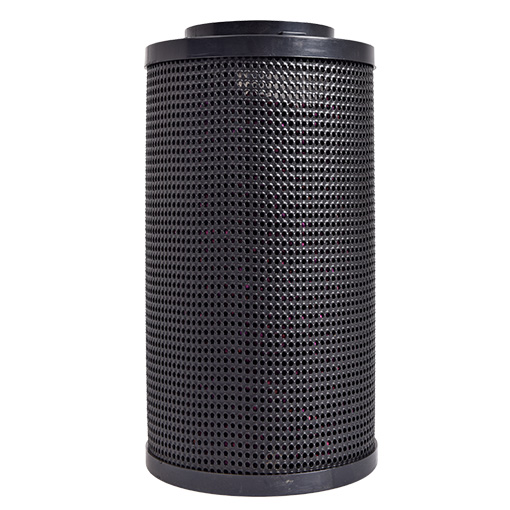
At LANSIR, we specialize in air-purification filters. For home formaldehyde removal, we use room-temperature catalytic decomposition.
Our route relies on a manganese-based MnOx catalyst. It does not merely store formaldehyde through adsorption. It decomposes formaldehyde into water and carbon dioxide at room temperature.
This avoids the secondary-pollution problem. Activated carbon re-releases pollutants once saturated. Our approach also suits homes where formaldehyde is released slowly and continuously over the long term.
Of course, no air purifier is a cure-all. Ventilation and source control are still needed. A purifier is only the last line of backstop, never an excuse to skip opening the windows.
Conclusion: a supplement, not a replacement
So we return to the original question. If you can open your windows, do you still need an air purifier? The answer is yes, but as a supplement, not a substitute.
In daily life, ventilate to dilute pollutants. Let the purifier guard against particles during the times ventilation cannot cover. The two work together and are steadier than either alone.
As for gases and radon, do not ask the purifier to handle them. Use ventilation and source control to solve them properly.